Real Lambskin vs. Bonded Leather: How to Tell the Difference

If you're about to spend real money on a leather jacket, the single most important thing to understand is this: not all leather is the same leather. The word "leather" on a label can mean a buttery, full-grain lambskin that will outlive you — or it can mean shredded scraps glued onto a fabric backing and stamped to look the part. Knowing the difference is the line between an investment and a regret.
This guide walks you through exactly how to tell real lambskin from bonded or "genuine leather," what to feel for, what to look for, and the questions that separate a jacket worth keeping for decades from one that cracks within a season.
Why lambskin sits at the top
Lambskin is prized for one reason above all: the hand-feel. It is dramatically softer and thinner than cowhide, with a fine, tight grain that drapes against the body instead of standing stiff. A well-made lambskin jacket can be as thin as 0.8mm — roughly the thickness of a credit card — yet still hold its structure and warmth. That combination of suppleness and resilience is why lambskin has been the choice for refined outerwear for generations.
It is also unforgiving to fake. The qualities that make lambskin special — softness, even grain, lightness — are nearly impossible to replicate with bonded material, which is exactly why learning to read leather protects you.
The leather grading scale, decoded
Labels use words that sound premium but often mean the opposite. Here's the real hierarchy, top to bottom:
- Full-grain lambskin — the entire top layer of the hide, untouched. The most durable and the most beautiful as it ages. This is what you want.
- Top-grain — the top layer lightly sanded to remove imperfections. Still genuine, still good.
- "Genuine leather" — counterintuitively, this is a low grade. It's a real-leather layer, but a split lower one, often heavily treated.
- Bonded leather — leftover leather dust and scraps glued to a backing with polyurethane. It is to real leather what particleboard is to solid oak. It peels, cracks, and flakes — usually within a year.
If a jacket is cheap and the only word on the tag is "genuine leather" or "bonded," you now know what that signals.
Five tests you can do in seconds
1. The grain test. Real lambskin has an irregular, natural grain — no two sections are identical, because it came from an actual animal. Bonded and faux leather show a repeating, machine-stamped pattern. Look closely: if the texture repeats perfectly, it isn't full-grain.
2. The weight and drape test. Genuine lambskin is light but has body — it falls and folds naturally. Bonded leather often feels either oddly stiff or suspiciously uniform, with a plasticky rebound.
3. The smell test. Real leather has a rich, earthy, unmistakable scent. Faux and heavily bonded materials smell like chemicals or plastic. Your nose is a surprisingly reliable instrument here.
4. The press test. Press your thumb gently into real leather and it creases and wrinkles slightly around the pressure, then recovers — like skin. Synthetic stays flat and smooth.
5. The edge test. Look at a cut edge or seam. Real leather is solid and consistent in color through its thickness. Bonded leather reveals a fabric or backing layer at the edge — the tell-tale sign of glue and scraps.
Beyond the leather: what else separates a lasting jacket
Material is the foundation, but construction decides longevity:
- Lining matters. A quality jacket has a real lining — viscose or jacquard — that protects the leather from the inside and feels considered, not cheap.
- Stitching should be tight and even. Loose or wandering stitches are the first thing to fail.
- Hardware should feel substantial. Zippers and snaps are where corners get cut on cheap pieces.
- Where it's made. Italian leather craftsmanship carries a centuries-long reputation for a reason — the tanning and finishing traditions are hard to shortcut.
How Vencci approaches it
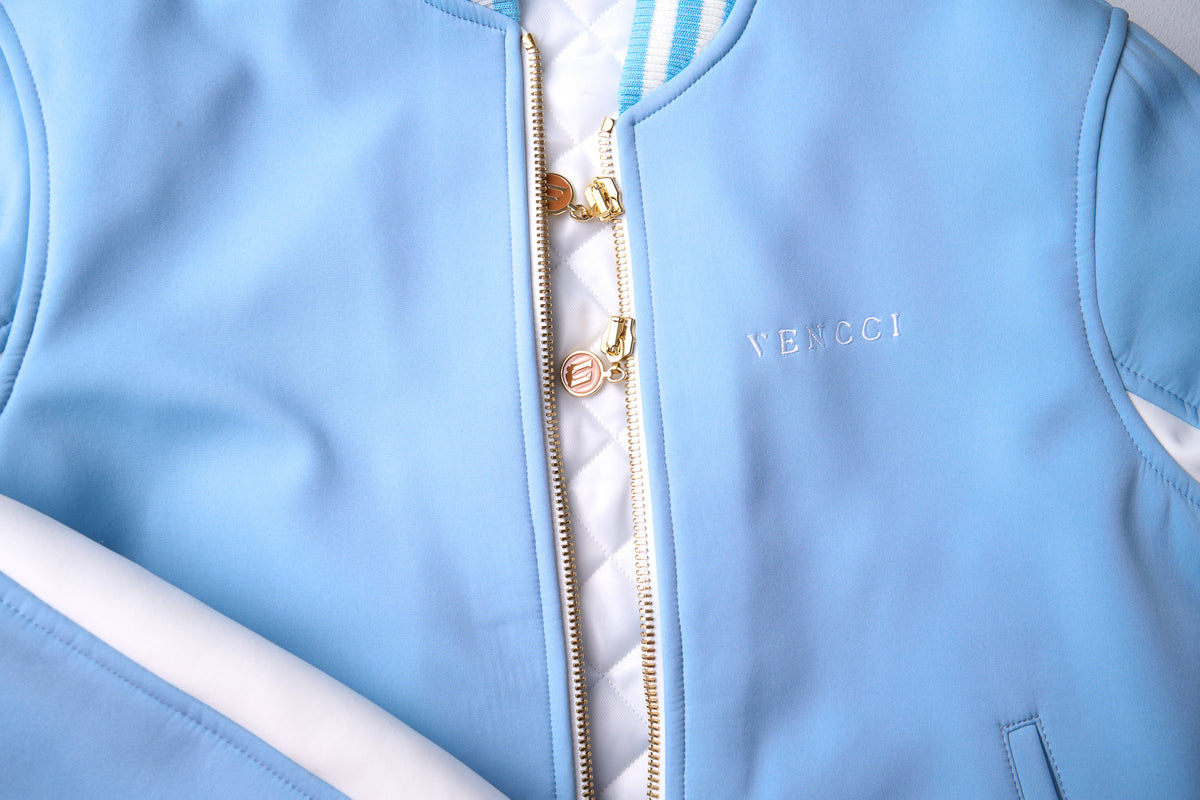
This is the standard we hold ourselves to. The Vencci lambskin outerwear is made in Italy from A-grade lambskin at roughly 0.8mm, finished with a dark-gold viscose jacquard lining — built so the jacket earns its place in your wardrobe for years, not seasons.
Our most exclusive piece, the 001/001 Cashmere Varsity Jacket, takes this further: a single, unrepeatable piece. No restock. No reproduction. Ever. It's the philosophy of buying well once instead of buying often — the same idea behind everything in this guide.
The bottom line
A leather jacket should be one of the few things you buy that gets better with age. The way to guarantee that is simple: learn to read the leather before you pay. Check the grain, feel the weight, trust your nose, inspect the edge. Real lambskin will tell you what it is — you just have to know how to listen.
When you're ready to feel the difference for yourself, explore the Vencci outerwear collection.
0 comments