What Makes a Cashmere-Blend Jacket Worth It

A few months ago a customer stood in front of one of our jackets, ran the fabric between two fingers, looked at the price, and asked me the most honest question in fashion:
“How do I know this is actually worth it — and not just a name I’m paying for?”
I respected him for asking it. The truth is, it’s almost impossible to judge the value of a garment when no one ever taught you what to look at. The label says “cashmere blend” — and so does a $180 jacket at the mall. So in this article, I’ll walk you through exactly what separates a cashmere-blend jacket that’s worth its price from one that only looks the part, so the next time you’re holding one, you’ll know.

The Label Tells You Almost Nothing
A blend percentage is a starting point, not a verdict. The same “70% wool, 15% cashmere” can describe two jackets that feel like they came from different planets.
What separates them isn’t printed anywhere:
- Fiber length — longer, finer cashmere stays soft and holds its shape; short fibers blended in cheaply pill and thin within a season
- The grade of the cashmere — both can legally be called “cashmere”
- What the maker chose to pay for — quality is decided before the fabric is ever woven
The percentage is a number anyone can print. The fiber behind it is a choice the maker had to pay for.

Where Cashmere Actually Comes From
Cashmere isn’t wool. It’s the soft undercoat of the cashmere goat — combed out by hand once a year, in tiny quantities. A single goat yields only a few ounces of usable down. That scarcity is the whole reason cashmere costs what it does, and the reason corners get cut.

Hold raw cashmere in your hand and the difference is obvious before it’s ever spun: the good stuff is long, fine, and cloud-soft. Longer fibers spin into yarn that resists pilling and holds shape for years. Shorter fibers — blended in to hit a percentage cheaply — feel plush for one season, then fuzz and thin at the cuffs and collar. Both end up on a label that just says “cashmere.”
Where the Money Actually Goes
When a cashmere-blend jacket earns its price, the cost is hiding where a product photo can’t show you.
Fiber Sourcing
Grade-A cashmere from a verified mill costs multiples of the generic stuff. A maker who cares specifies the mill. A maker who doesn’t specifies a percentage.
The Blend Engineering
A cashmere–wool body isn’t two fibers thrown together. The wool gives structure and durability; the cashmere gives the hand-feel and warmth-to-weight. Getting that ratio right so the jacket drapes without sagging is deliberate design — not an accident of supply.
The Construction
- 🧵 Seams finished to survive a decade, not a season
- 💪 A body cut so the fabric falls clean across the shoulders
- ✨ Ribbing and facings that hold their shape through real wear
Cheap construction wrapped around good fabric is still a cheap jacket.

The Contrast Materials & Finishing
On a varsity silhouette, the sleeves and details do the talking. Genuine lambskin leather ages into a patina — it gets better. Bonded or faux leather cracks and peels, usually right at the elbow, usually in the second winter. The same honesty shows in the lining, the hardware, and where a piece is made.
👉 Read why real lambskin beats bonded leather
The Real Test of Worth Is Time
Here’s the honest way to judge any cashmere-blend jacket, regardless of brand: divide the price by the years you’ll actually wear it.
- A $200 jacket that pills and sags after two seasons = roughly $100 a season, and you replace it again
- A properly built cashmere-blend jacket with leather sleeves = a piece you reach for every fall for ten years
The math inverts. The expensive jacket becomes the cheap one. That’s the entire logic of buying well instead of buying often.
What This Looks Like in Practice
This is the standard we build to at Vencci — which is why I’ll point you at two specific pieces instead of a catalog.
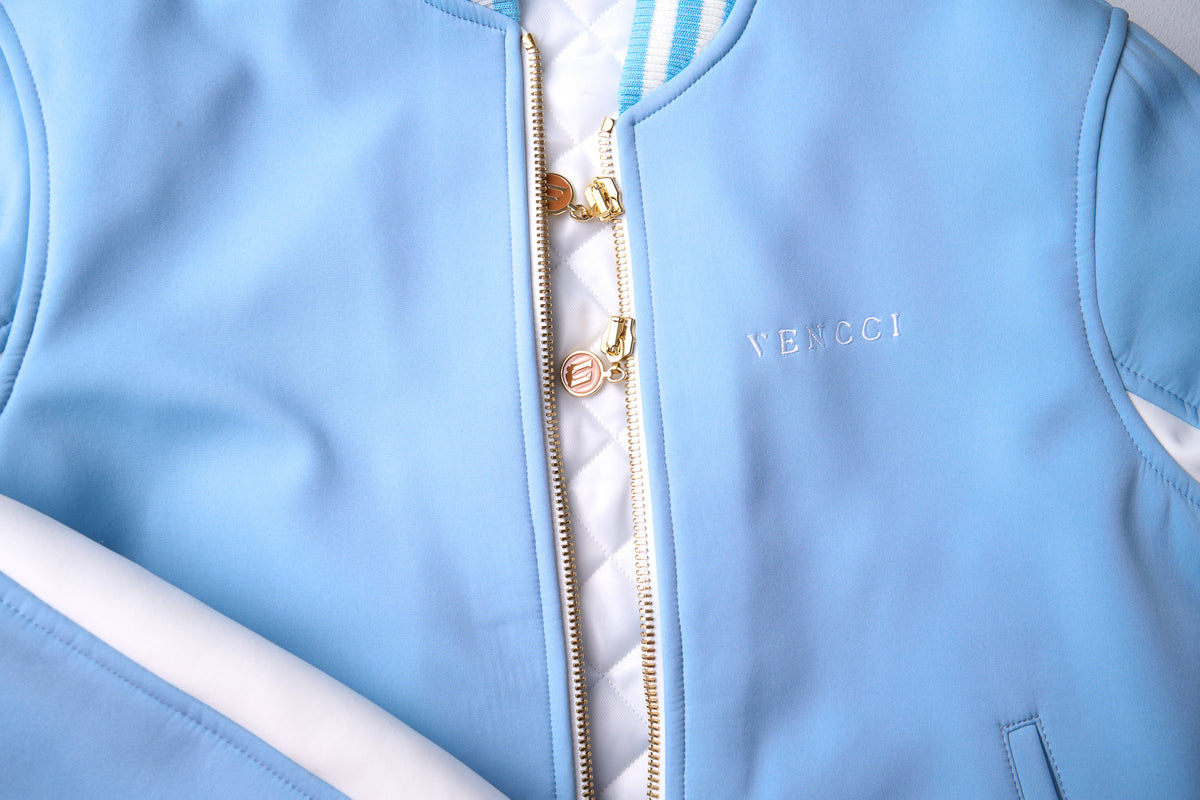
The Vencci Cashmere Varsity Jacket is the clearest expression of it: a cashmere–wool blend body, genuine lambskin leather sleeves, a gold-tone double zipper, made in Italy. American heritage through an Italian lens — built so the leather ages with you.
👉 Explore the Vencci Cashmere Varsity Jacket
For the man who wants the fullest statement of the craft, the “001/001” Cashmere-Blend Wool Jacket with Lambskin Sleeves is exactly what the name says — a single, numbered piece. Not a price point; the argument for everything above, made in one object.
Conclusion: How to Know It’s Worth It
A cashmere-blend jacket is worth its price when it holds up to three questions — questions you can ask in any store, holding any jacket:
- 🧵 What’s the fiber actually like? Long-staple, named mill, not just a percentage
- 💪 How is it built? Clean shoulders, decade-grade seams, genuine leather where it counts
- 🌬 How many years will I wear it? Cost per wear, not sticker price
If the answers hold, the jacket is worth it — whoever made it. If they don’t, no label in the world will fix that.
👉 Explore Vencci’s Limited Jackets & Statement Pieces
0 comentarios